

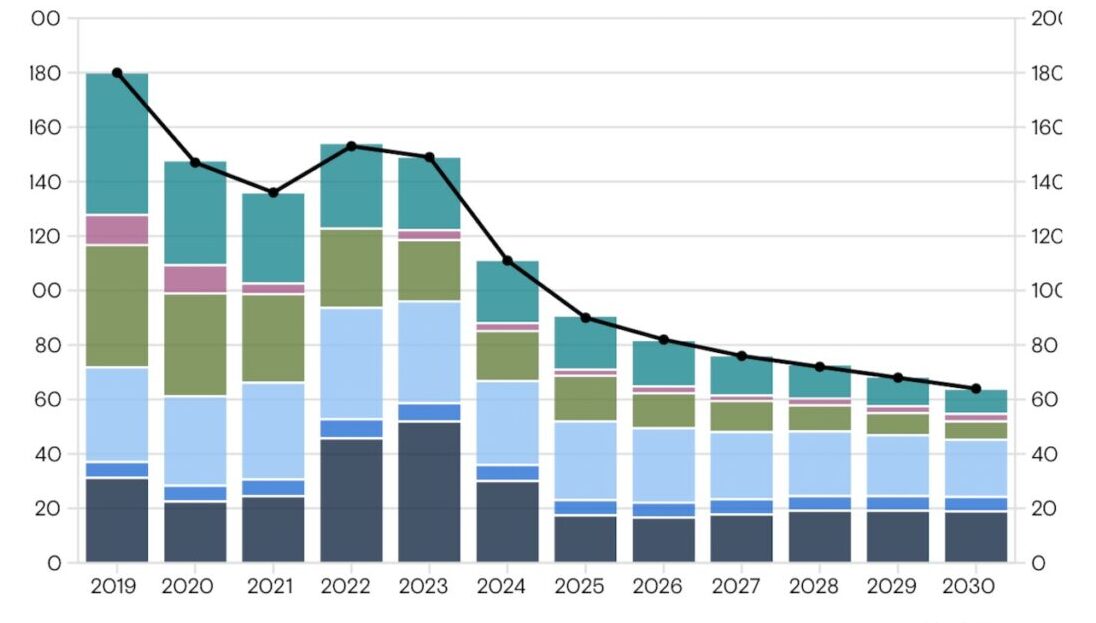
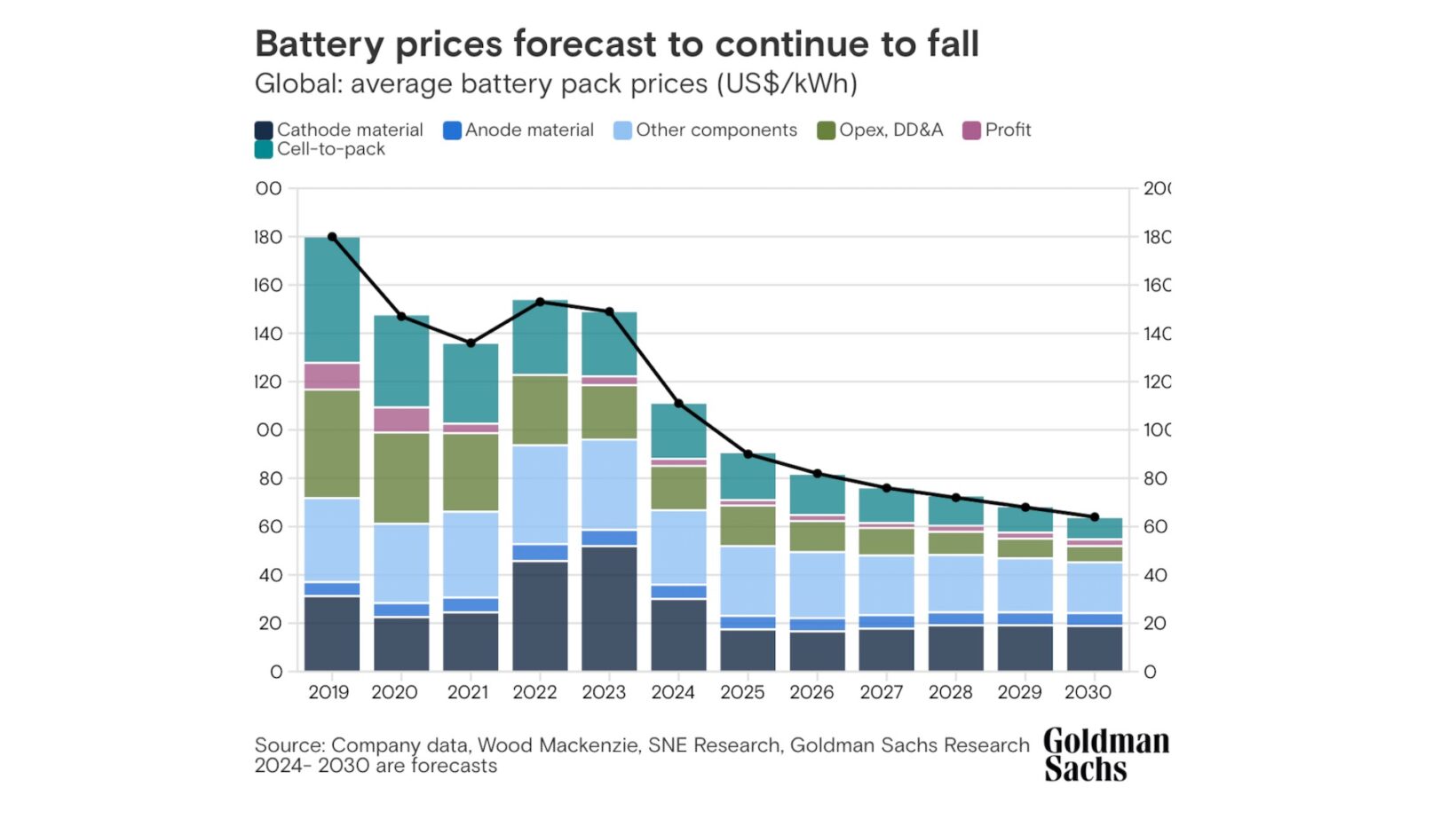
The economics of battery energy storage systems (BESS) are improving rapidly, driven by sustained cost reductions across both mobile and stationary applications. Multiple market studies point to a structural decline in battery prices, reinforcing the role of storage as a core component of future energy systems.
According to research by Goldman Sachs, average battery pack prices are expected to fall to around €60/kWh by 2030. This downward trend is supported by scaling effects, technological improvements, and increasing global demand for affordable and reliable storage solutions.
Lower costs have a direct impact on project viability. As capital expenditure declines, grid-scale battery systems become increasingly competitive across a wider range of use cases—from grid balancing and renewable integration to energy trading and peak management.
This shift is particularly relevant in markets like Switzerland, where the need for flexibility is rising alongside renewable penetration. As storage becomes more affordable, deployment is expected to accelerate, enabling broader participation in flexibility markets and improving overall grid resilience.

